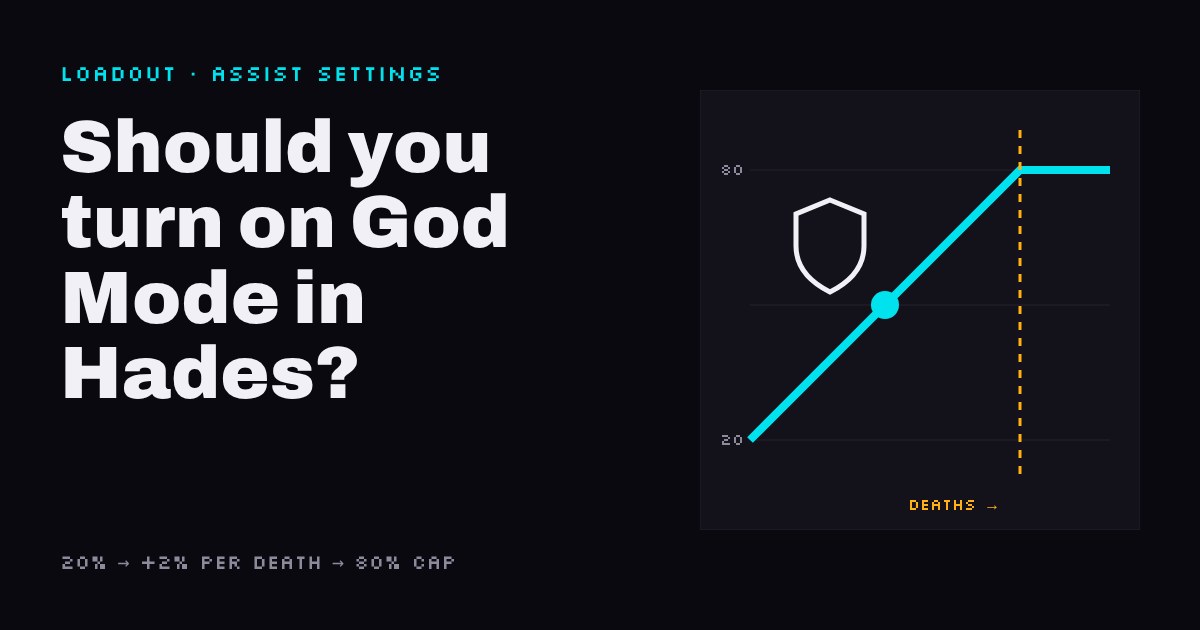
Yes, turn on God Mode in Hades if you're stuck: you start with 20% damage resistance, +2% per death up to 80%, and enemies stay unchanged.
This guide explains what the setting changes and what it leaves alone, why more mistakes per run can mean faster learning, and the one habit (trading hits) to watch for. A toy model lets you drag the death count and see how many hits a run can absorb. It ends with a simple ladder for using God Mode, and notes on how Hades II handles the same option.
▶ Interactive · Should you turn on God Mode in Hades?
Yes, if you're stuck or frustrated, turn it on. God Mode in Hades makes you tougher instead of making the game easier: you start with 20% damage resistance, it grows by 2% every time you die, up to 80%. Enemies, bosses and their attack patterns stay exactly the same, so you are still learning the real game, just with more room for mistakes while you do.
That's the short answer. The longer one is about what the setting actually changes, the one habit it can teach you that you'll want to drop later, and how to use it as a ladder rather than a crutch.
What God Mode does
Hades (Supergiant Games, 2020) is an action roguelite: each attempt is a run through the underworld, death sends you back to the start, and some upgrades stay with you between runs. (New to the term? Our guide to what a roguelike is covers it.) God Mode is a checkbox in the game's settings, and you can switch it on or off at any time.
When it's on, you take less damage from enemy attacks. The resistance starts at 20% and rises by 2% with each death, so it reaches the 80% cap after 30 deaths. Three details matter for a newcomer:
The bonus is banked. Turn God Mode off and back on, and the resistance you had built up is still there.
No penalty. In Hades it doesn't block achievements or trophies. The game keeps the run records for God Mode runs separately from normal runs.
Nothing else moves. Enemy health, enemy speed, attack patterns and dodge timing are untouched.
That last point is the design idea. In an interview with Inverse, creative director Greg Kasavin explained that a normal easy mode would let players blow through the game, which breaks a story built around dying and trying again. Making enemies weaker was out; the team asked instead, "What if we just make you a little bit tougher?" You still die, you still go back, but each run lasts long enough to watch what the enemies do.
Try it: how many mistakes a run can absorb
This toy model uses a made-up 50-point health bar and three made-up hit sizes. It isn't real Hades data; it only shows the shape of the setting. Drag the deaths slider and watch the number of hits you can take before going down.
Notice what the slider never changes: the attack. A big hit still comes from the same wind-up at the same speed, and the dodge that avoids it is still the same dodge. God Mode changes how many times you can get it wrong in one run, and therefore how many times you get to see it.
Why it can help you learn
On this site we describe difficulty by its sources rather than as one number. Hades is mostly an Execution game (timing, positioning, dodging at the right moment), with Consequence (what failure costs you) softened because some progress survives every death. God Mode works on the Execution side, but in an unusual way: it doesn't make the timing easier, it makes each mistake cheaper.
Here's the case that this helps. You learn a boss by seeing its attacks, and you can only see them while you're alive. Without God Mode, a newcomer may reach the first boss with little health left and die before the second phase ever starts. With it, the same run often lasts long enough to see the whole fight. More looks per run means you start recognising the wind-ups sooner, and that recognition stays when the setting is off.
The fair counter-view: some players feel a win with God Mode on isn't fully theirs, and the game's story is partly about pushing through repeated failure. That's a matter of taste, not a rule. Hades files God Mode runs separately and doesn't lock anything away, so the choice is yours to make and remake.
The habit to watch for
High resistance makes it tempting to stand in front of an enemy and trade hits, because at 60% or 80% resistance you'll usually win the trade. Treat that as a warning sign, not a strategy you're building. It's the habit that gets punished hardest when the setting is off, or when you start adding difficulty through the Pact of Punishment (the game's optional modifiers, measured in Heat). Keep dodging as if every hit counted in full, and God Mode stays a training aid.
How to use it as a ladder
Turn it on when you're stuck, not just when you're new. If the same area ends your run five times in a row and you're no longer enjoying it, that's the moment.
Play for patterns, not damage. In each fight, pick one attack you keep getting hit by and watch for its wind-up.
Try a run with it off once you've cleared the game, or once a region stops scaring you. Your banked resistance waits for you if you want it back.
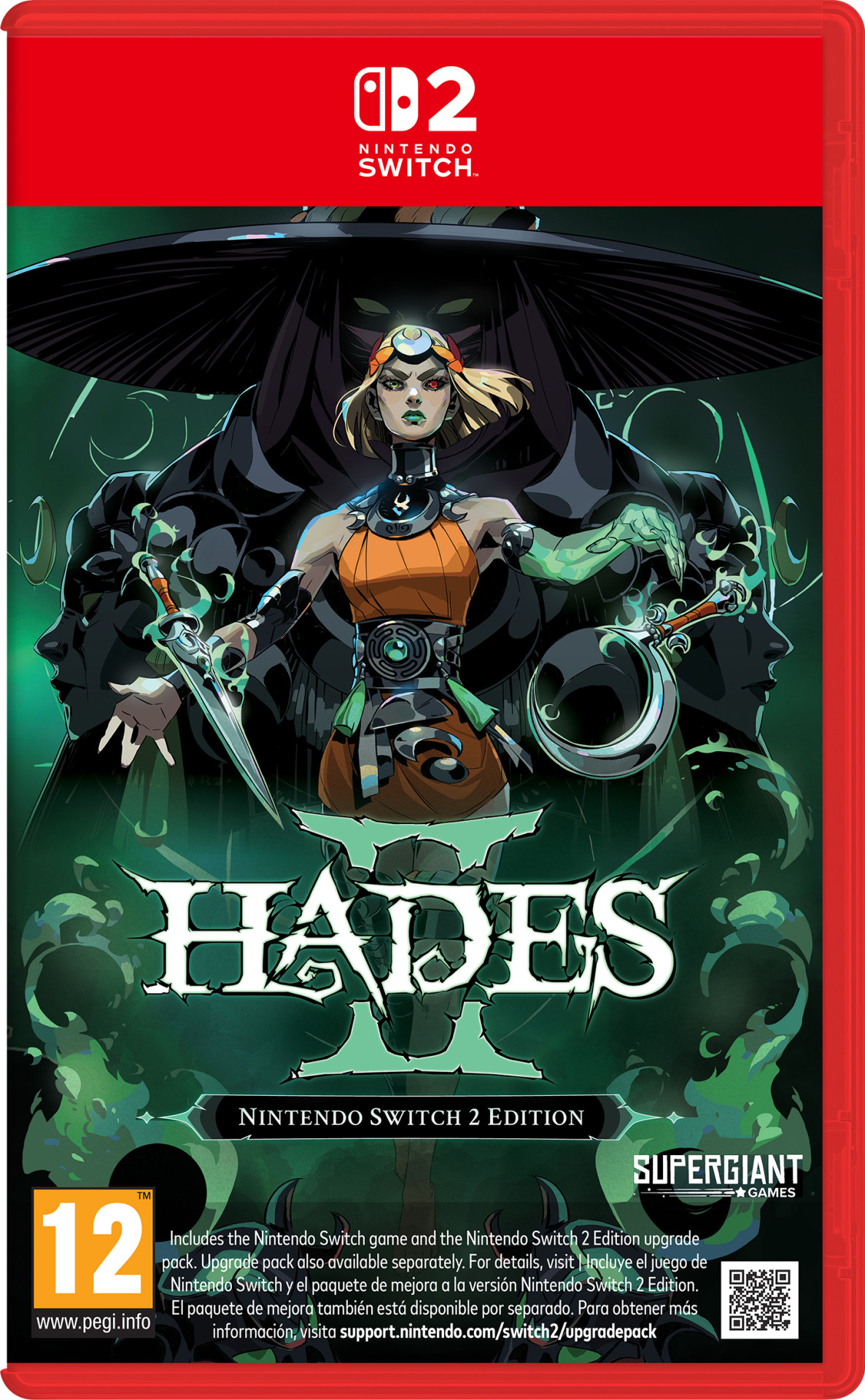
The same idea carries into the sequel. Hades II (2025) has its own God Mode under Options, then Gameplay, with the same 20% start, 2% per death and 80% cap, and it also keeps your built-up resistance when you switch it off. Its optional difficulty system is the Oath of the Unseen, measured in Fear.
It makes you tougher, but enemies and their attacks are unchanged, so you still have to learn the fights.
Does God Mode disable achievements in Hades?
No; achievements and trophies still unlock, and God Mode runs are simply recorded separately.
Can I turn God Mode off later?
Yes, at any time in the settings, and the resistance you built up is kept if you turn it back on.
Next step: start your next Hades run with God Mode on, pick the one attack that ends most of your runs, and count how many times you see its wind-up before you dodge it cleanly.
Loadout · gear used
Affiliate links, marked sponsored. We may earn a commission at no extra cost to you. Examples that match this guide, not tested reviews. Prices checked 23 Nov; every shop and live prices are on each product page.