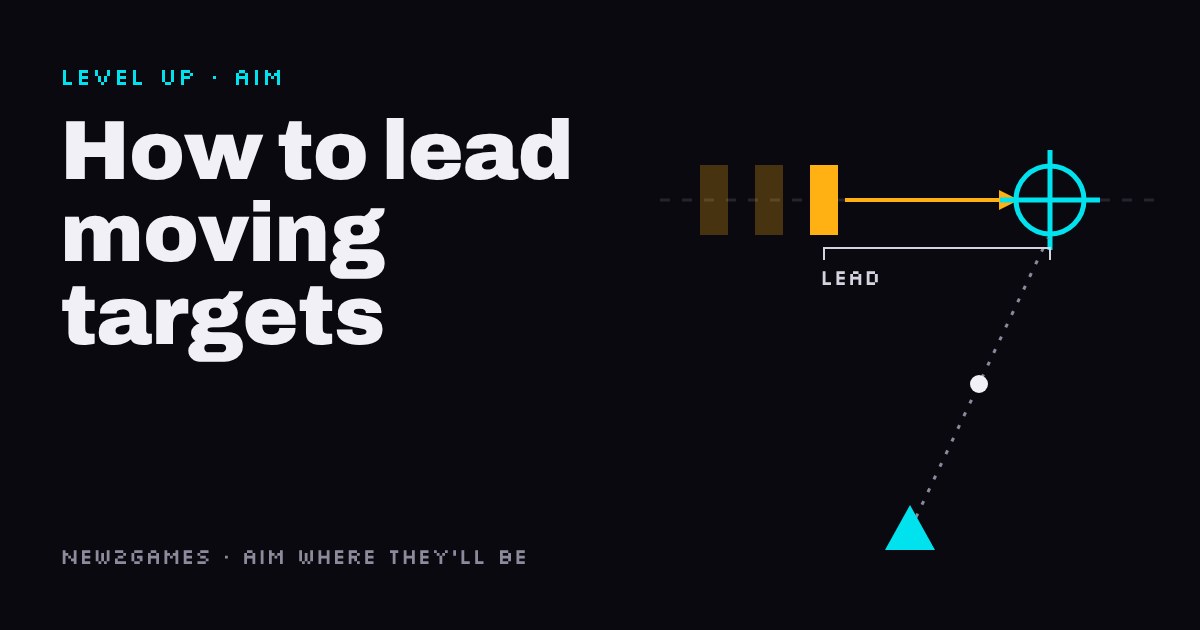
Aim where the target will be when your shot arrives: the lead grows with target speed, with distance and with slower projectiles. Here's how to make it automatic.
Hitscan guns hit instantly, so you track; projectiles like rockets, arrows and Battlefield 6 bullets travel, so you lead. Try the interactive to feel how distance and speed change the lead, then learn it in body widths instead of maths.
▶ Interactive · How to lead moving targets in shooters
To hit a moving target with a slow shot, aim where the target will be when the shot arrives, not where it is now. How far ahead depends on three things: how fast the target moves, how far away it is, and how fast your shot travels. Double the distance and you need double the lead. That's the whole rule; the rest of this guide is about making it automatic.
If you've ever emptied a magazine at a running player and watched every shot land just behind them, you weren't aiming badly. You were aiming perfectly at the wrong moment.
Two kinds of shot: instant and travelling
Shooters handle bullets in one of two ways. A hitscan weapon registers the hit instantly along the line you're aiming down: the game checks what's under your crosshair the moment you fire. A projectile weapon spawns an actual object (a bullet, rocket, arrow or blob of ink) that flies at a set speed and can miss if the target moves out of the way while it's in the air.
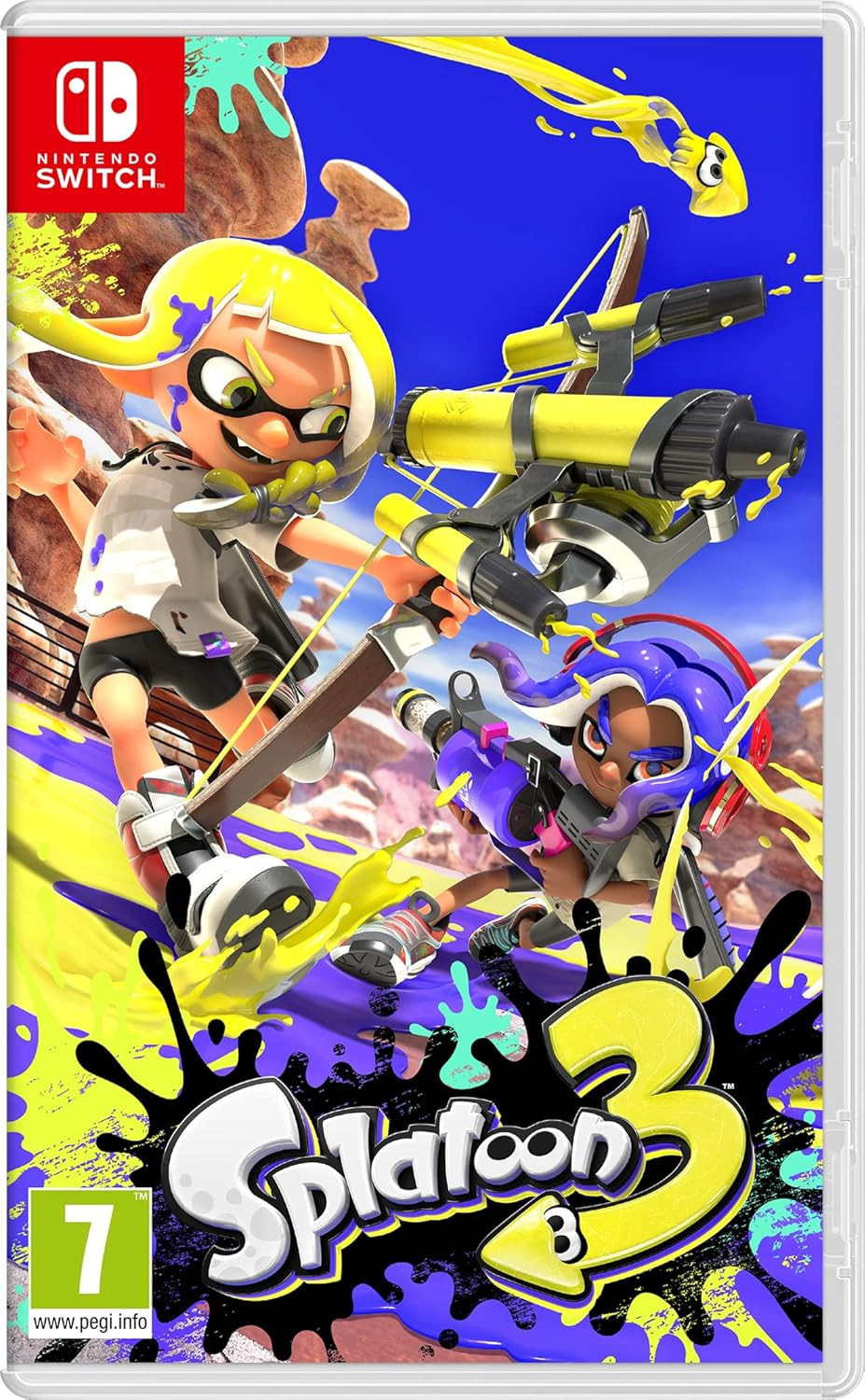
Many games mix the two. In Overwatch 2, Soldier: 76 and Cassidy fire hitscan guns, while Pharah's rockets are projectiles you have to lead. In Battlefield 6, bullets are projectiles: they take time to arrive and, according to EA's own gunplay notes, slow down and drop noticeably at long range (past about 150 m). In Splatoon 3, ink shots fly straight for a short distance, then slow and fall, so even close fights reward a little lead.
With hitscan, your job is tracking: keep the crosshair on the target as it moves. With projectiles, your job is leading: keep the crosshair a fixed distance ahead of it. Both are aim skills, but they feel opposite, and switching between them is where a lot of misses come from.
Try it: find the lead
The target below runs to the right. Pick a weapon and a speed, set your lead with the slider (or drag in the field), and fire. Tap Answer to see the ideal lead. The numbers are illustrative, not taken from any specific game.
Play with it for a minute and three patterns show up. Doubling the distance doubles the lead. A sprinting target needs roughly three times the lead of a walking one. And a fast bullet needs almost no lead at normal ranges, which is why leading only becomes a conscious skill with slow projectiles or long shots.
How to lead without doing maths
Nobody calculates flight time mid-fight. What good players do is turn the rule into a feel:
Think in body widths. "Two bodies ahead" is easier to see on screen than metres. At a given range and weapon, the number stays roughly the same, so learn the lead for your weapon at the distance you fight at most.
Lead, then move with them. Don't park your crosshair in empty space and wait. Hold the gap and track the target with it, as if the crosshair were tied to them by a short stick.
Shoot predictable movement. A player running in a straight line, falling from a jump or climbing a ladder can't change direction quickly. That's when a slow shot is most likely to land. Someone strafing left and right (switching direction to dodge) is a poor target for a rocket and a better one for a hitscan gun.
Use splash. With explosive projectiles, aim at the ground near the target's feet. A near miss still catches them in the blast, which makes the lead you need far less precise, as the rocket shows above.
Start slow. Practise against bots or a practice range on the weapon you actually use, and pay attention to where misses land. Behind the target means more lead; ahead means less.
One warning: lead is a habit, and habits carry over even when they shouldn't. If you switch from a projectile weapon to a hitscan one, your hand will keep aiming ahead for a while, and you'll miss in front instead of behind. Give yourself a few practice rounds whenever you change weapon type.
Where else the skill shows up
Leading isn't really a shooter skill; it's prediction, and it appears anywhere something takes time to arrive. A through-ball in a football game goes into space ahead of the runner, not to their feet. In Rocket League, you drive to where the ball will land, not where it is. Even the slow projectiles in a bullet hell are the same problem from the other side: they're aimed at where you were. Once you start seeing "aim at the future position" as one skill, practice in one game helps in the others.
Shots that look right but still miss can also come from the gun itself rather than the target: see our guide to recoil vs spread. If you play on a handheld, gyro aiming makes the small, smooth adjustments that leading needs much easier. And for why an online target sometimes isn't quite where it appears, new2gaming explains ping and lag.
Next step: pick one projectile weapon you like, load a practice range or a bot match, and spend ten minutes only shooting at moving targets at one distance. Count how many body widths ahead your hits land. If you want a game built around travelling shots, Battlefield 6 makes long-range lead and drop part of every rifle fight.
Quick answers
How far ahead should I aim?
Target speed times your shot's flight time; in practice, learn it in body widths for your weapon at your usual range.
Do I need to lead with every gun?
No: hitscan weapons hit instantly, so you track the target instead of leading it.
Why do my shots land behind moving players?
You're aiming where they are, not where they'll be when the shot arrives; add lead until misses stop trailing.
Loadout · gear used
Affiliate links, marked sponsored. We may earn a commission at no extra cost to you. Examples that match this guide, not tested reviews. Prices checked 20 Nov; every shop and live prices are on each product page.