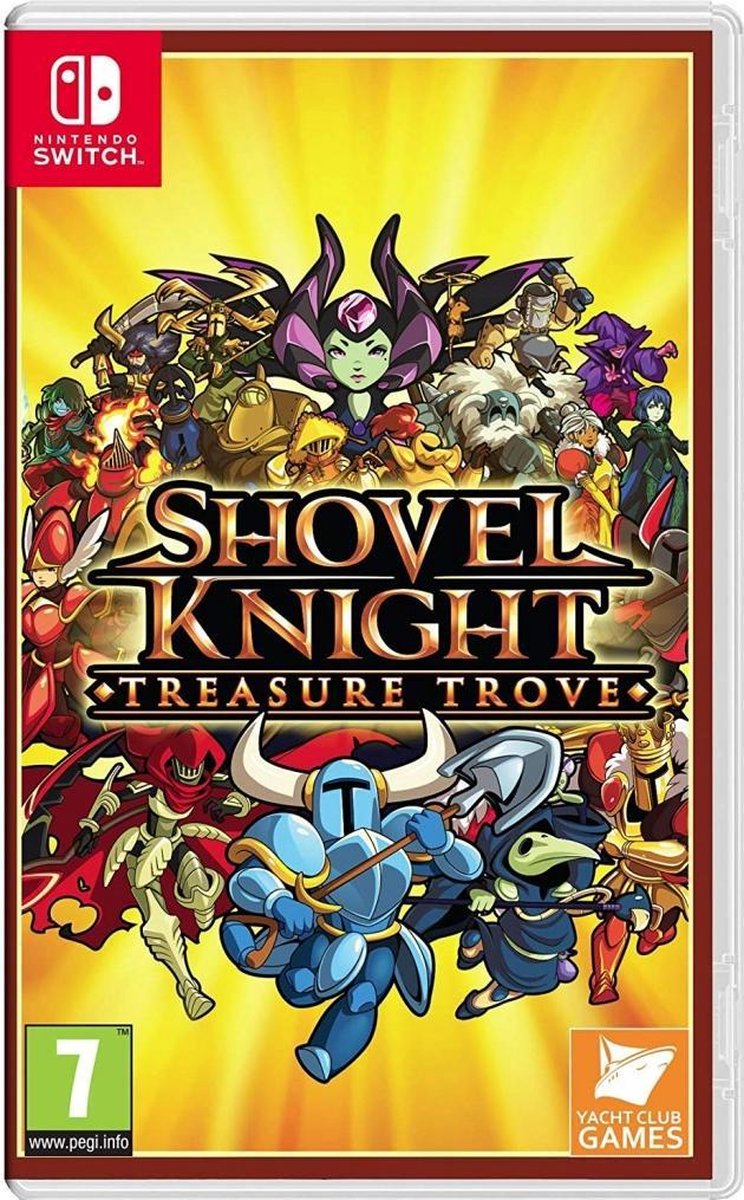
Shovel Knight: Treasure Trove
Lets you smash checkpoints for treasure, a neat test of the guide's advice to keep the checkpoints you are given.
- Switch, physical
- Breakable checkpoints
€27.49
bol.com ↗
specs, live price ▸
To beat a hard retro level without save states, practise its hardest section on its own: the sections chain, so your chances multiply.
Four sections you each clear 80% of the time give a clean run only about 41% of the time. This guide shows why, with a chain calculator you can set to your own numbers, then lays out a practice method borrowed from deathless runners: map the chain, isolate the weakest link, count your clean tries, and use the game's own checkpoints.

To beat a hard retro level without save states, stop replaying the whole level and start practising its hardest section on its own. A level with no saves is a chain: you must clear every section in one go, so your chances multiply. Four sections you each beat 80% of the time give you a clean run only about 41% of the time. Strengthen the weakest link and the whole chain gets stronger.
That is why a level can feel impossible even when no single part of it is. You are not bad at the level. You are fighting arithmetic.
To finish that four-section stage you need section one and two and three and four, back to back: 0.8 × 0.8 × 0.8 × 0.8 ≈ 0.41. Ten sections at 90% each leave you about 35%, even though every piece feels "basically fine". And that is the friendly version, which treats each section as a fresh coin flip. In real play, nerves on the final stretch usually make the last section harder than it is in practice.
On this site we describe difficulty by its sources, not a single score. A long level with no saves is loud on three:
A save state is a snapshot of the exact moment you are in, which an emulator or re-release can reload instantly. It removes Consequence and Endurance and leaves only Execution, which is why a level that took all evening falls in minutes with one.
Many early console games had no way to save. The original Mega Man (1987) had no password system, so a full clear meant one sitting; Mega Man 2 added passwords. Lives add another link: in many games a game over sends you further back than a single death, so one bad section can cost several.
NES Ninja Gaiden is the classic case. It has unlimited continues, but die at the final boss and you restart the whole level. The hardest section is the last link of a long chain, the shape the calculator below punishes most.
Modern collections often soften this: Nintendo Switch Online's NES library offers four suspend-point slots, a save state by another name. Using them is your call; the method below works either way.
Two things jump out. First, +10 (one practice session, in this model) always helps most on your weakest section. With the starting numbers, ten points on the 50% boss lifts a deathless run from 22% to 26%; the same ten points on the 90% opening barely moves it. Ten points is a fifth more success at 50%, only a ninth more at 90%.
Second, add a checkpoint. It cuts one long chain into two short ones, and the average deaths before you finish fall sharply even though no section got easier. That is checkpoint spacing working on Endurance.
The players who know this best chase runs with no deaths at all. In Celeste (2018), a precision platformer built from single-screen rooms with checkpoints between them, a golden strawberry rewards clearing a whole chapter without dying. The community guide's advice is the chain idea in practice: drill the hardest rooms alone, then do deathless runs of single checkpoint sections, and only then go for the full chapter. Speedrunners work the same way, one segment at a time. Here is the method for any retro level:
One habit works against all this, so treat it as a warning rather than a skill: restarting the whole level after every death. It feels like practice, but you play the easy opening twenty times for every attempt at the part that actually stops you.
Celeste's Assist Mode lets you slow the game (down to half speed), turn on infinite stamina, add extra air dashes or become invincible. On one section it works as a practice tool: slow the hard room, learn the route, then raise the speed back. The North American Mega Man 2 did a version of this too, adding a Normal mode with stronger weapons.
The fair counter-view: some players feel a clear with assists or save states isn't the same achievement, and if a pure clear is your goal, that is a good goal. The chain method works the same either way; only the links you choose to shorten change.
See also: why a 1% drop chance doesn't mean 1 in 100 on new2gaming, on how independent tries add up.
Because you must clear every part in one go, so the success rates multiply, and several "pretty reliable" sections add up to an unreliable run.
The one you fail most, because raising your weakest success rate lifts the whole run more than polishing a section you already clear.
No; drilling one section with them is just practice, and you can still make the real attempt without them.
Your next step: pick the level that is beating you, split it into three to five sections, and do ten tries of the one that kills you most. Write the score down, then put your real numbers into the calculator and see what one good practice session is worth.
Lets you smash checkpoints for treasure, a neat test of the guide's advice to keep the checkpoints you are given.
The NES games this guide talks about, including Mega Man 2, for practising long levels the old way.
Short rooms with checkpoints and an Assist Mode, the gentlest way to build the section-by-section habit.